

What is a Program Analyst? Complete Guide to Roles, Responsibilities, Salary & Career
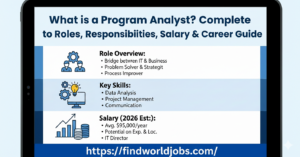

In today’s data-driven world, organizations depend heavily on performance analysis, strategic planning, and operational efficiency to stay competitive. This is where professionals like Program Analysts play an important role. If you are wondering what is a Program Analyst, this guide explains everything about the role, including job duties, responsibilities, salary, required skills, and career growth.
Understanding what is a Program Analyst helps job seekers explore a career focused on data analysis, program evaluation, and organizational improvement. Program Analysts help organizations improve productivity, reduce costs, and achieve strategic goals through data-driven decision-making.
Whether working in government agencies, private companies, healthcare organizations, or technology firms, Program Analysts contribute significantly to business success and operational efficiency.
This complete career guide explains what is a Program Analyst, their daily duties, work environment, qualifications, and future job outlook.
1. What is a Program Analyst?
Many job seekers ask what is a Program Analyst and what they actually do in organizations. A Program Analyst is a professional responsible for evaluating programs, analyzing performance data, and recommending improvements to increase efficiency and effectiveness.
The main goal of a Program Analyst is to ensure programs operate successfully, meet performance goals, and use resources efficiently. Understanding what is a Program Analyst also means understanding their role in helping organizations make informed decisions based on data and research.
⭐ Key Objectives
-
Evaluate program performance
-
Improve operational efficiency
-
Analyze performance data
-
Identify operational problems
-
Recommend process improvements
-
Monitor program outcomes and budgets
-
Support strategic decision-making
Professionals who understand what is a Program Analyst recognize that this role requires strong analytical thinking and problem-solving skills.
Government Program Analyst positions in the United States are commonly listed on platforms like USAJOBS.
2. Program Analyst Job Overview
To fully understand what is a Program Analyst, it is important to examine their overall role within an organization. Program Analysts work closely with management teams, project managers, and department leaders to evaluate performance and improve operational processes.
Core Purpose of the Role
-
Evaluate organizational programs
-
Analyze operational performance
-
Improve processes and workflows
-
Monitor program results
-
Provide data-driven recommendations
Organizations that understand what is a Program Analyst often rely on these professionals for strategic decision-making and performance monitoring.
Program Analyst Salary 2026 – Complete Pay Guide, Skills & Career Growth
3. Why Program Analysts Are Important for Organizations
Another way to understand what is a Program Analyst is by looking at their impact on business success. Modern organizations generate large volumes of data and manage complex operations. Without proper analysis, inefficiencies may go unnoticed.
Program Analysts help organizations by:
-
Improving productivity
-
Reducing operational costs
-
Enhancing service quality
-
Managing risks
-
Supporting business strategies
-
Monitoring program performance
Companies that clearly understand what is a Program Analyst value their ability to improve efficiency and performance.
4. Key Roles and Responsibilities of a Program Analyst
Understanding responsibilities helps clarify what is a Program Analyst and how they contribute to organizational success.
A. Program Evaluation
-
Review program results
-
Measure effectiveness
-
Identify strengths and weaknesses
-
Compare outcomes with goals
-
Recommend improvements
B. Data Collection and Analysis
-
Gather operational data
-
Analyze trends and patterns
-
Interpret results
-
Prepare analytical reports
C. Process Improvement
-
Identify inefficiencies
-
Recommend improvements
-
Monitor performance changes
-
Optimize productivity
D. Policy and Procedure Review
-
Evaluate company policies
-
Ensure regulatory compliance
-
Improve organizational standards
E. Budget Monitoring
-
Track expenses
-
Evaluate financial performance
-
Identify cost-saving opportunities
F. Reporting and Documentation
-
Prepare reports
-
Present findings
-
Maintain program records
When people ask what is a Program Analyst, these responsibilities explain the practical nature of the role.
5. Daily Duties of a Program Analyst
A typical workday provides further clarity about what is a Program Analyst in practice.
Daily Activities
-
Reviewing performance reports
-
Conducting research
-
Analyzing data and metrics
-
Meeting with stakeholders
-
Monitoring project progress
-
Preparing documentation
-
Recommending solutions
Most work involves computer-based analysis and strategic planning.
6. Types of Program Analyst Roles
To better understand what is a Program Analyst, it is useful to know that the role exists across multiple industries.
Government Program Analyst
-
Evaluate public programs
-
Monitor policy performance
IT Program Analyst
-
Analyze system performance
-
Improve technology processes
Business Program Analyst
-
Improve business operations
-
Support corporate strategies
Healthcare Program Analyst
-
Evaluate healthcare services
-
Improve patient programs
Each industry applies the same analytical principles.
7. Essential Skills Required for Program Analysts
Anyone researching what is a Program Analyst should also understand the skills required.
Key Skills
-
Analytical thinking
-
Problem-solving ability
-
Communication skills
-
Research ability
-
Technical knowledge
-
Project management
Strong analytical skills are the foundation of this profession.
8. Education Requirements
Education helps define what is a Program Analyst in terms of career preparation.
Minimum Education
-
Bachelor’s degree in Business Administration
-
Economics
-
Public Administration
-
Information Technology
-
Finance or related field
Advanced Education
-
Master’s degree for senior roles
-
Professional certifications
Higher education increases career opportunities.
9. Work Environment
Understanding the work setting also explains what is a Program Analyst.
Work Settings
-
Government offices
-
Corporate organizations
-
Consulting firms
-
Financial institutions
-
Research organizations
Most positions involve structured office or remote work.
10. Program Analyst Salary Overview
Salary expectations help answer what is a Program Analyst from a career perspective.
Average Salary (U.S.)
-
Entry Level: $55,000 – $70,000
-
Mid-Level: $75,000 – $95,000
-
Senior Level: $100,000+
Government positions often include additional benefits.
11. Career Growth Opportunities
Career advancement further explains what is a Program Analyst as a long-term profession.
Career Path
-
Senior Program Analyst
-
Program Manager
-
Business Analyst
-
Operations Manager
-
Policy Analyst
-
Director of Programs
Experience and performance drive growth.
12. Future Job Outlook (2026–2030)
Understanding industry demand helps clarify what is a Program Analyst in the modern workforce.
Growth Factors
-
Increasing use of data-driven decisions
-
Business process optimization
-
Expansion of government programs
-
Need for performance monitoring
Demand for analytical professionals continues to grow globally.
13. Is Program Analyst a Good Career Choice?
Many professionals researching what is a Program Analyst want to know if it is a good career. The answer is yes. This role offers strong job demand, competitive salaries, and excellent career growth opportunities.
Program Analysts help organizations improve performance and efficiency, making them valuable across industries.
Program Analyst Job Description – Roles, Responsibilities & Skills Guide
Final Thoughts
Understanding what is a Program Analyst provides valuable insight into a career centered on data analysis, performance evaluation, and organizational improvement. Program Analysts play a critical role in modern organizations by examining processes, monitoring performance metrics, and recommending strategies that help businesses and institutions operate more efficiently. Their ability to analyze complex information and provide data-driven solutions allows organizations to improve productivity, reduce operational costs, manage risks, and achieve long-term strategic goals.
As industries continue to evolve and rely more on technology and data-driven decision-making, the importance of Program Analysts continues to grow. Organizations across government, healthcare, finance, technology, and corporate sectors depend on these professionals to ensure programs deliver measurable results and meet organizational objectives. This increasing demand makes the role highly valuable and offers strong job security and career stability for qualified professionals.
A career as a Program Analyst also provides excellent opportunities for professional development and advancement. With experience, individuals can move into senior leadership roles such as Program Manager, Operations Manager, or strategic planning positions. The role also helps professionals develop transferable skills like analytical thinking, research ability, project management, and communication skills, which are valuable across multiple industries.
For individuals interested in data analysis, research, problem-solving, and organizational strategy, becoming a Program Analyst can be a highly rewarding and future-proof career path. With competitive salary potential, diverse career opportunities, and growing global demand, this profession offers long-term growth, continuous learning opportunities, and the chance to make meaningful contributions to organizational success.