
Psychologist vs. Psychiatrist: What’s the Difference and Who Should You See?
Mental health awareness in the United States has increased dramatically in recent years. More people are seeking professional help for anxiety, depression, trauma, and stress-related conditions. However, one common question remains: Psychologist vs. Psychiatrist — which one should you choose?
Understanding the difference between these two professionals is essential before starting treatment. While both work in mental health care, their training, responsibilities, and treatment approaches differ significantly.
In this complete guide, we will break down Psychologist vs. Psychiatrist, including education, salary, job roles, therapy vs. medication, and how to apply for jobs in both fields.
Understanding Psychologist vs. Psychiatrist: Key Differences
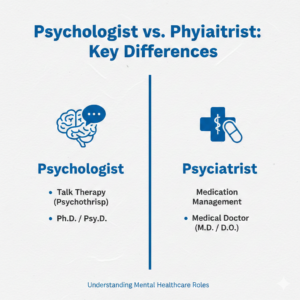
When comparing Psychologist vs. Psychiatrist, the biggest difference is medical training.
A psychiatrist is a licensed medical doctor (MD or DO) who can prescribe medication.
A psychologist holds a doctoral degree (PhD or PsyD) and focuses mainly on psychotherapy and behavioral interventions.
In simple terms:
-
Psychiatrists treat mental health conditions using medical and pharmacological approaches.
-
Psychologists focus on talk therapy, emotional regulation, and behavioral change.
Both professionals diagnose mental health disorders, but their treatment methods vary.
What Is a Psychologist?
To better understand Psychologist vs. Psychiatrist, let’s first define what a psychologist does.
A psychologist is a licensed mental health professional trained to evaluate and treat emotional, behavioral, and cognitive disorders through therapy and psychological testing.
Education and Training
In the United States, psychologists typically complete:
-
4-year bachelor’s degree
-
4–7 years doctoral program (PhD or PsyD)
-
Supervised internship/residency
-
State licensure exams
Psychologists are not medical doctors and generally cannot prescribe medication (except in a few states with special certification).
What Psychologists Do
Psychologists commonly:
-
Provide individual therapy
-
Conduct Cognitive Behavioral Therapy (CBT)
-
Offer family or couples counseling
-
Perform psychological testing
-
Diagnose anxiety, depression, PTSD, ADHD, and more
In the discussion of Psychologist vs. Psychiatrist, psychologists are known for long-term therapy and emotional development work.
What Is a Psychiatrist?
Now let’s look at the other side of Psychologist vs. Psychiatrist.
A psychiatrist is a medical doctor who specializes in diagnosing and treating mental health disorders, often using medication.
Education and Training
Psychiatrists complete:
-
4-year bachelor’s degree
-
4-year medical school
-
4-year psychiatry residency
-
Optional fellowship training
They earn either:
-
Doctor of Medicine (MD)
-
Doctor of Osteopathic Medicine (DO)
Because they attend medical school, psychiatrists understand how mental health interacts with physical health conditions.
What Psychiatrists Do
Psychiatrists:
-
Diagnose mental illnesses
-
Prescribe and manage medications
-
Monitor side effects
-
Provide brief therapy sessions in some cases
When evaluating Psychologist vs. Psychiatrist, psychiatrists are often essential for severe mental health disorders requiring medication.
Psychologist vs. Psychiatrist: Therapy vs. Medication
One of the most important aspects of Psychologist vs. Psychiatrist is the treatment style.
Psychologists and Therapy
Psychologists specialize in:
-
Cognitive Behavioral Therapy (CBT)
-
Dialectical Behavior Therapy (DBT)
-
Trauma-focused therapy
-
Psychodynamic therapy
Therapy sessions usually last 45–60 minutes and focus on long-term behavioral and emotional change.
Psychiatrists and Medication
Psychiatrists prescribe medications such as:
-
Antidepressants
-
Mood stabilizers
-
Anti-anxiety medications
-
Antipsychotics
-
ADHD medications
Appointments are often shorter (15–30 minutes) and focus on medication management.
In many cases, patients benefit from seeing both professionals when comparing Psychologist vs. Psychiatrist treatment options.
Psychologist vs. Psychiatrist: Salary and Career Differences
Another major comparison in Psychologist vs. Psychiatrist is income and career path.
Psychologist Salary (USA)
-
Average salary: $85,000–$110,000 per year
-
Higher earnings in private practice
-
Specializations (forensic, neuropsychology) may increase income
Psychiatrist Salary (USA)
-
Average salary: $220,000–$300,000+ per year
-
High demand nationwide
-
Greater earning potential due to medical degree
The salary gap in Psychologist vs. Psychiatrist exists because psychiatrists complete medical school and prescribe medication.
Psychologist vs. Psychiatrist: Who Should You See?
Choosing between Psychologist vs. Psychiatrist depends on your symptoms and treatment goals.
See a Psychologist If:
-
You want talk therapy
-
You are managing stress or relationship issues
-
You prefer non-medication treatment
-
You need psychological testing
See a Psychiatrist If:
-
Your symptoms are severe
-
You may need medication
-
You have bipolar disorder or schizophrenia
-
Therapy alone has not helped
Many Americans use a combined approach in the Psychologist vs. Psychiatrist decision process.
How to Apply for Psychologist Jobs in the U.S.
If you are interested in the career side of Psychologist vs. Psychiatrist, here’s how to apply:
Official Job Platforms:
-
American Psychological Association (APA) – PsycCareers
-
LinkedIn Jobs
Steps to Apply:
-
Create a professional resume/CV
-
Obtain state licensure
-
Search by specialty and location
-
Submit applications online
-
Prepare for clinical interviews
How to Apply for Psychiatrist Jobs in the U.S.
For those pursuing the psychiatrist path in the Psychologist vs. Psychiatrist comparison:
Official Job Platforms:
-
American Psychiatric Association – JobCentral
-
PracticeMatch
-
PracticeLink
-
Hospital and health system career pages
Steps to Apply:
-
Complete MD/DO and residency
-
Obtain board certification
-
Secure state medical license
-
Apply via hospital or psychiatry job boards
-
Negotiate salary and contract terms
Similarities in Psychologist vs. Psychiatrist
Despite differences, both professionals:
-
Diagnose mental health conditions
-
Follow strict ethical standards
-
Require state licensure
-
Protect patient confidentiality
-
Aim to improve overall mental wellness
Understanding both sides of Psychologist vs. Psychiatrist helps patients make informed decisions.
READ MORE- How to Become a Psychologist in 2026: Step-by-Step Career Guide, Education & Salary
Frequently Asked Questions (FAQs)
1. What is the difference between a psychologist and a psychiatrist?
The main difference is that a psychiatrist is a medical doctor (MD or DO) who can prescribe medication, while a psychologist holds a PhD or PsyD and mainly provides therapy and psychological testing. Psychiatrists focus on medication and brain chemistry, while psychologists focus on behavioral and emotional treatment.
2. Who should I see first: a psychologist or a psychiatrist?
If your symptoms are mild to moderate (stress, anxiety, relationship problems), start with a psychologist for therapy. If your symptoms are severe (bipolar disorder, suicidal thoughts, psychosis), see a psychiatrist immediately for medical evaluation.
3. Can a psychologist prescribe medication?
In most U.S. states, psychologists cannot prescribe medication. However, a few states allow specially trained psychologists with additional certification to prescribe limited medications.
4. Do psychiatrists provide therapy?
Some psychiatrists provide therapy, but many focus mainly on medication management. Many patients see both a psychologist for therapy and a psychiatrist for medication.
5. Is therapy better than medication?
It depends on the condition. Mild depression or anxiety may improve with therapy alone. Severe mental health disorders often require medication plus therapy for the best results.
6. How long does it take to become a psychologist vs. psychiatrist?
A psychologist typically requires 8–12 years of education and training after high school. A psychiatrist usually requires 12+ years, including medical school and residency.
7. Who earns more: psychologist or psychiatrist?
Psychiatrists earn significantly more because they are medical doctors. In the U.S., psychiatrists often earn $220,000–$300,000+ annually, while psychologists average $85,000–$110,000 per year.
8. Can both psychologists and psychiatrists diagnose mental health disorders?
Yes. Both professionals are licensed to diagnose conditions such as anxiety, depression, ADHD, PTSD, and bipolar disorder.
9. Do I need a referral to see a psychologist or psychiatrist?
It depends on your insurance plan. Some insurance providers require a referral from a primary care doctor, while others allow direct booking.
10. Can I see both a psychologist and a psychiatrist?
Yes. Many people benefit from seeing both—one for therapy and the other for medication management. This combined approach is common for moderate to severe mental health conditions.
11. What conditions require a psychiatrist?
Conditions like schizophrenia, bipolar disorder, severe depression, and complex medication management typically require a psychiatrist.
12. What conditions are best treated by a psychologist?
Stress management, relationship issues, trauma recovery, mild depression, and anxiety are commonly treated by psychologists through therapy.
1 thought on “Psychologist vs. Psychiatrist explained—differences, therapy vs. medication, salary details, and how to apply for jobs in the U.S.”
Comments are closed.