

Psychiatrist Salary 2026: Job Requirements, Earnings & Career Path Guide

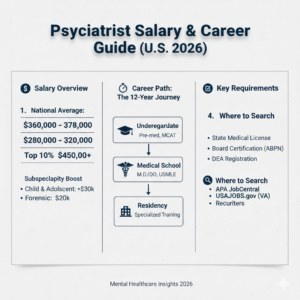
Mental health awareness is growing rapidly across the United States, and with it, demand for highly trained medical professionals who can diagnose, treat, and manage complex psychiatric conditions. If you are researching Psychiatrist Salary, career requirements, and long-term growth opportunities, this comprehensive 2026 guide will walk you through everything you need to know.
What Is a Psychiatrist?
A psychiatrist is a licensed medical doctor (MD or DO) who specializes in diagnosing, treating, and preventing mental, emotional, and behavioral disorders. Unlike psychologists, psychiatrists can prescribe medication and manage complex psychiatric conditions using a combination of medical and therapeutic approaches.
Psychiatrists treat conditions such as:
-
Major depressive disorder
-
Bipolar disorder
-
Schizophrenia
-
Anxiety disorders
-
PTSD
-
ADHD
-
Substance use disorders
Because psychiatrists are physicians, their training includes medical school, residency, and board certification. This extensive education is one reason the Psychiatrist Salary in the U.S. is among the highest in the mental health field.
Psychiatrist Salary in 2026 (U.S. Overview)
Understanding current compensation trends is critical when evaluating career options.
National Average (2026 Estimates)
-
Average Annual Salary: $240,000 – $310,000
-
Entry-Level Salary: $180,000 – $220,000
-
Mid-Career Salary: $250,000 – $320,000
-
Experienced / Senior Level: $320,000 – $400,000+
-
Hourly Rate: $115 – $180 per hour
The Psychiatrist Salary varies significantly based on location, experience, subspecialty, and work setting.
Psychiatrist Salary by State (Highest Paying States)
Location plays a major role in income. States facing mental health provider shortages often offer higher compensation.
Highest Paying States (2026 Trends)
-
California
-
New York
-
Texas
-
Florida
-
Illinois
-
Massachusetts
-
Washington
-
Arizona
In rural and underserved areas, compensation packages may exceed $350,000 due to demand.
The Psychiatrist Salary is typically higher in metropolitan areas but may offer better work-life balance in smaller communities.
Psychiatrist Salary by Work Setting
Your workplace significantly affects income.
1. Private Practice
-
$280,000 – $400,000+
-
Highest earning potential
-
Greater autonomy
-
Business management responsibilities
2. Hospitals
-
$220,000 – $300,000
-
Stable employment
-
Benefits included
3. Outpatient Clinics
-
$210,000 – $280,000
-
Predictable hours
-
Lower stress compared to inpatient
4. Academic Institutions
-
$190,000 – $260,000
-
Teaching and research opportunities
5. Telepsychiatry
-
$200,000 – $350,000
-
Flexible remote work
-
Growing rapidly in 2026
The rise of telemedicine has positively influenced overall Psychiatist Salary trends nationwide.
Bonuses and Additional Compensation
Beyond base salary, psychiatrists often receive:
-
Signing bonuses ($10,000 – $50,000)
-
Relocation assistance
-
Performance bonuses
-
Profit-sharing (private practice)
-
Loan repayment programs
-
CME (Continuing Medical Education) allowances
Total compensation packages can significantly increase overall Psychiatrist Salary earnings.
Job Requirements to Become a Psychiatrist
Becoming a psychiatrist requires a long but structured path.
Step 1: Bachelor’s Degree (4 Years)
Most students major in:
-
Biology
-
Chemistry
-
Neuroscience
-
Psychology (with pre-med coursework)
Step 2: Medical School (4 Years)
After passing the MCAT:
-
Earn MD (Doctor of Medicine) or DO (Doctor of Osteopathic Medicine)
-
Complete clinical rotations
Step 3: Residency in Psychiatry (4 Years)
Residency includes:
-
Inpatient psychiatry
-
Outpatient psychiatry
-
Emergency psychiatry
-
Child and adolescent exposure
-
Addiction psychiatry
Step 4: Board Certification
After residency, physicians must pass board exams to become certified psychiatrists.
Step 5: Optional Fellowship (1–2 Years)
Subspecialties include:
-
Child & Adolescent Psychiatry
-
Forensic Psychiatry
-
Addiction Psychiatry
-
Geriatric Psychiatry
-
Consultation-Liaison Psychiatry
Higher specialization can increase Psychiatrist Salary potential significantly.
Skills Required for a Successful Psychiatry Career
High income alone doesn’t define success. Essential skills include:
-
Strong diagnostic reasoning
-
Emotional intelligence
-
Communication skills
-
Crisis management
-
Ethical decision-making
-
Medical knowledge
Because psychiatry combines medicine and psychology, professionals must balance clinical science with compassionate care.
Career Path Timeline
| Stage | Years Required | Approx. Age |
|---|---|---|
| Bachelor’s Degree | 4 years | 18–22 |
| Medical School | 4 years | 22–26 |
| Residency | 4 years | 26–30 |
| Optional Fellowship | 1–2 years | 30–32 |
Most psychiatrists begin earning full Psychiatrist Salary around age 30–32.
Job Outlook for Psychiatrists (2026–2036)
The job outlook remains extremely strong.
Why Demand Is Rising
-
Increased mental health awareness
-
Insurance coverage expansion
-
Shortage of providers
-
Growth in telehealth services
-
Aging population
Psychiatry consistently ranks among the fastest-growing medical specialties.
The Bureau of Labor Statistics projects strong demand for physicians, especially in mental health, which positively impacts future Psychiatrist Salary growth.
Psychiatrist vs. Other Medical Specialties (Salary Comparison)
| Specialty | Average Salary |
|---|---|
| Psychiatry | $240K–$310K |
| Family Medicine | $220K–$270K |
| Pediatrics | $200K–$250K |
| Internal Medicine | $230K–$290K |
| Surgery | $350K–$500K |
While surgical fields may earn more, psychiatry offers:
-
Better lifestyle balance
-
Lower burnout rates
-
Flexible scheduling
This balance makes Psychiatrist Salary attractive relative to workload.
Is Psychiatry Worth It Financially?
Let’s consider:
Total Education Cost:
-
$200,000 – $400,000 (medical school debt average)
Return on Investment:
-
High earning potential
-
Loan forgiveness programs
-
Strong job security
-
Long-term income stability
Despite training length, the long-term Psychiatist Salary makes psychiatry financially rewarding.
Pros and Cons of Becoming a Psychiatrist
Pros
-
High income potential
-
Meaningful patient impact
-
Flexible work options
-
Strong demand
-
Remote work opportunities
Cons
-
Long training period
-
Student loan debt
-
Emotional stress
-
Complex patient cases
How to Increase Your Psychiatrist Salary
If you want to maximize earnings:
-
Subspecialize (Child, Forensic, Addiction)
-
Open private practice
-
Offer telepsychiatry services
-
Work in underserved areas
-
Negotiate signing bonuses
-
Take leadership roles
Strategic planning can significantly raise your long-term Psychiatrist Salary.
Telepsychiatry and Future Salary Trends
Telehealth has changed mental health care delivery.
Benefits:
-
Work from home
-
Flexible hours
-
National patient reach
-
Reduced overhead
Many telepsychiatrists earn competitive or higher-than-average Psychiatrist Salary due to scalability and lower operational costs.
Work-Life Balance in Psychiatry
Compared to many medical fields:
-
Fewer overnight emergencies
-
More predictable schedules
-
Outpatient flexibility
-
Reduced physical strain
This improves job satisfaction while maintaining strong Psychiatrist Salary levels.
Licensing and Certification Requirements
To practice legally in the U.S., psychiatrists must:
-
Pass USMLE or COMLEX exams
-
Complete accredited residency
-
Obtain state medical license
-
Maintain board certification
-
Complete continuing medical education
Failure to maintain licensure can impact earning potential and professional standing.
Who Should Consider Psychiatry?
You may be a good fit if:
-
You enjoy neuroscience and psychology
-
You want meaningful patient relationships
-
You prefer cognitive work over procedural medicine
-
You value work-life balance
-
You are comfortable managing medications
How to Apply for Psychiatrist Jobs in the U.S. (Step-by-Step Guide – 2026)
If you have completed medical school and psychiatry residency — or you are close to finishing — here is a clear, professional roadmap to apply for psychiatrist jobs in the United States.
Step 1: Complete Licensing Requirements
Before applying, ensure you have:
-
MD or DO degree
-
Completed accredited psychiatry residency
-
Passed USMLE (for MD) or COMLEX-USA (for DO)
-
Active state medical license
-
DEA registration (to prescribe controlled substances)
-
Board certification (or board eligible)
Employers will not consider candidates without proper licensure.
Step 2: Prepare a Strong Psychiatrist CV
Your CV should include:
-
Education & medical training
-
Residency details
-
Board certification status
-
Clinical experience (inpatient, outpatient, emergency, telepsychiatry)
-
Research/publications (if any)
-
Licenses & certifications
-
Professional affiliations
-
References
💡 Tip: Highlight subspecialties like Child Psychiatry, Addiction Psychiatry, or Forensic Psychiatry — these can increase job opportunities and overall Psychiatrist Salary potential.
Step 3: Apply Through Official Job Platforms
Here are trusted platforms where psychiatrists commonly apply:
1️⃣ American Psychiatric Association (APA) Job Board
Official organization career portal:
https://jobs.psychiatry.org
2️⃣ American Medical Association (AMA) Career Center
3️⃣ USAJOBS (Federal Government Positions)
For VA hospitals and federal roles:
https://www.usajobs.gov
4️⃣ Major Healthcare Job Portals
-
Indeed.com
-
LinkedIn Jobs
-
Doximity
-
PracticeLink
-
Merritt Hawkins (physician recruitment firm)
Step 4: Network Strategically
Many psychiatrist positions are filled through:
-
Residency program directors
-
Medical conferences
-
Professional associations
-
Hospital connections
-
Recruiters
Networking can lead to higher-paying roles and better contract negotiations.
Step 5: Interview & Contract Negotiation
During interviews:
Ask about:
-
Base salary
-
Bonus structure
-
Call schedule
-
Work hours
-
Patient load
-
Telehealth options
-
Loan repayment
-
CME allowance
-
Malpractice coverage
Always review contracts carefully. Consider hiring a physician contract attorney before signing.
Step 6: Credentialing & Onboarding
Once hired:
-
Complete hospital credentialing
-
Submit licensing verification
-
Finalize insurance enrollment
-
Complete background checks
-
Set up malpractice insurance
Credentialing can take 1–3 months.
Special Path: International Medical Graduates (IMGs)
If you studied outside the U.S., you must:
-
Obtain ECFMG certification
-
Pass USMLE exams
-
Secure residency in the U.S.
-
Apply for visa sponsorship (if required)
Many hospitals sponsor J-1 or H-1B visas.
Telepsychiatry Application Process
To apply for remote psychiatrist roles:
-
Obtain multi-state licensure (if possible)
-
Ensure strong internet & private workspace
-
Apply through telehealth companies
-
Highlight digital health experience
Telepsychiatry roles are expanding rapidly in 2026.
Pro Tips to Get Hired Faster
✔ Apply 6–9 months before residency completion
✔ Be open to underserved or rural areas
✔ Obtain additional certifications (Addiction, Child Psychiatry)
✔ Prepare a professional LinkedIn profile
✔ Work with physician recruiters
READ MORE- Psychologist vs. Psychiatrist explained—differences, therapy vs. medication, salary details, and how to apply for jobs in the U.S.
Final Thoughts
Choosing psychiatry is not just about income — it is about impact. While financial stability is an important factor when selecting a medical specialty, psychiatry offers something deeper: the opportunity to transform lives at their most vulnerable moments. From treating severe depression and bipolar disorder to helping patients manage schizophrenia, anxiety, trauma, and addiction, psychiatrists play a critical role in improving both individual well-being and public health. Still, from a financial perspective, Psychiatrist Salary in 2026 remains strong, competitive, and stable across most regions of the United States, making it one of the most attractive specialties in modern medicine.
The demand for psychiatric services continues to rise due to increased awareness of mental health, reduced stigma, broader insurance coverage, and the rapid expansion of telehealth platforms. Hospitals, private practices, community clinics, and remote care companies are actively recruiting qualified professionals. As a result, Psychiatrist Salary levels are not only competitive but also supported by signing bonuses, relocation assistance, student loan repayment programs, and flexible scheduling options. This creates both financial security and lifestyle balance — a rare combination in the medical field.
Beyond compensation, psychiatry offers long-term career sustainability. Compared to many procedural specialties, psychiatrists often experience more predictable work hours and lower physical strain. This contributes to improved work-life balance, career longevity, and professional satisfaction. Over time, experience, subspecialty certification, and private practice ownership can further increase Psychiatrist Salary, providing steady income growth throughout one’s career.
If you are willing to commit to the rigorous educational path — including medical school, residency, licensing, and board certification — the long-term rewards are substantial. Psychiatry allows physicians to combine neuroscience, psychology, and compassionate communication into a meaningful profession that directly addresses one of the most urgent healthcare needs of our time.
Looking ahead, workforce shortages and expanding access to care are expected to keep opportunities strong. The upward trend in Psychiatrist Salary reflects both market demand and the high level of expertise required in this field. For those seeking a career that offers financial stability, intellectual challenge, and lasting social impact, psychiatry remains a secure and forward-looking choice for 2026 and beyond.