
DHS Volunteer Force (DOW Detail) Guide – Eligibility, Duties, Salary & How to Apply
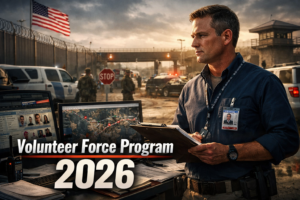
The Department of Homeland Security (DHS) plays a critical role in protecting the United States and maintaining national security. One of its unique initiatives is the Volunteer Force (VF) program, which allows eligible federal employees to support immigration operations and logistical missions for agencies such as U.S. Immigration and Customs Enforcement (ICE) and U.S. Customs and Border Protection (CBP).
The DHS Volunteer Force (DOW Detail) program provides an opportunity for federal civilian employees to temporarily deploy to ICE or CBP facilities and support operational tasks that help maintain an orderly immigration system in the United States.
This guide explains everything you need to know about the DHS Volunteer Force program, including eligibility, duties, deployment details, salary structure, and the step-by-step application process.
What is the DHS Volunteer Force (VF)?
The DHS Volunteer Force is a federal initiative designed to allow civilian employees from other federal departments to temporarily assist immigration enforcement operations across the United States.
Participants are deployed for temporary assignments (called “details”) to support operations related to immigration processing, logistical coordination, data management, and operational planning.
Key characteristics of the program include:
- Temporary assignments up to 180 days
- Deployment at ICE or CBP facilities
- Opportunities to support federal operations without performing law enforcement duties
- Travel, lodging, and daily allowances reimbursed according to government policy
The initiative helps strengthen coordination between federal agencies while improving the efficiency of immigration operations.
Agencies Involved in the Volunteer Force Program
The Volunteer Force initiative involves multiple U.S. federal agencies.
1. Department of Homeland Security
The Department of Homeland Security oversees the Volunteer Force program and coordinates deployments.
2. Federal Emergency Management Agency
The program is managed in collaboration with Federal Emergency Management Agency, which helps coordinate logistics and staffing.
3. Immigration and Customs Enforcement
The U.S. Immigration and Customs Enforcement handles immigration enforcement and detention operations.
4. Customs and Border Protection
The U.S. Customs and Border Protection protects U.S. borders and manages immigration processing at ports of entry.
Together, these agencies rely on Volunteer Force participants to support operational workloads during periods of high demand.
DHS Volunteer Force Duties and Responsibilities
Volunteer Force participants are assigned to critical support roles. These roles vary depending on operational needs and deployment location.
Importantly, volunteers do not perform law enforcement duties.
Below are the main responsibilities.
1. Data Entry and Information Management
One of the primary duties involves maintaining accurate data within immigration systems.
Responsibilities may include:
- Entering immigration case data
- Updating records in federal information systems
- Maintaining operational databases
- Verifying data accuracy
This work helps ensure accurate tracking of immigration cases and detainee records.
2. Operational Planning Support
Volunteers may assist ICE and CBP with planning operations.
Tasks may include:
- Supporting operational planning teams
- Developing concepts of operation
- Preparing mission support documents
- Coordinating administrative planning activities
These tasks help federal agencies plan immigration enforcement operations more efficiently.
3. Processing and Throughput Logistics
Another key responsibility is assisting with the processing of detained individuals through the immigration system.
Typical tasks include:
- Supporting processing operations
- Managing administrative records
- Tracking detainee movements
- Coordinating processing workflows
This role helps ensure smoother processing from arrest to deportation procedures.
4. Logistical Support
Volunteer Force members may assist with logistical coordination for operations across the United States.
Examples include:
- Planning movement of personnel
- Coordinating transportation of equipment
- Supporting operational resource planning
- Tracking deployment logistics
Logistics support ensures that law enforcement teams have the necessary resources to operate effectively.
5. Liaison and Coordination Roles
Some volunteers may also assist with communication between operational teams and planning units.
Responsibilities may include:
- Liaising with Volunteer Force planning teams
- Coordinating internal communication
- Supporting interagency cooperation
- Providing administrative support to leadership teams
These roles help maintain smooth coordination during large-scale operations.
DHS Volunteer Force Eligibility Requirements
Not everyone can apply for the Volunteer Force program. Specific eligibility conditions must be met.
Citizenship
Applicants must be U.S. citizens.
Federal Employment Requirement
Applicants must be current federal civilian employees working in the United States.
They must also:
- Have worked at their agency for more than 90 days
- No longer be in a probationary period
Performance Standards
Applicants must:
- Have good performance evaluations
- Have no disciplinary actions
- Be in good standing with their agency
Identification Requirements
Participants must possess a valid HSPD-12 compliant identification badge, such as:
- PIV card
- Military ID
Supervisory Approval
Applicants must receive formal approval from their supervisor before deployment.
This approval is documented using a Supervisory Deployment Authorization Form.
Travel Card Requirement
Although not mandatory, participants are encouraged to have a government travel card to manage official travel expenses.
Education Requirements
One of the most accessible aspects of the Volunteer Force program is that there are no formal education requirements.
This means:
- No specific degree is required
- Experience and current federal employment are more important than education
Training will be provided on the job after deployment.
Deployment Details and Duration
Volunteer Force assignments are temporary deployments known as details.
Duration
Deployments can last up to:
180 days
Participants may also be asked to deploy quickly once approvals are completed.
In some cases, deployment may occur within 96 hours of approval.
Work Schedule
Participants may need to work:
- Evenings
- Weekends
- Holidays
- Extended overtime
Overtime compensation follows federal pay regulations.
Deployment Locations
Volunteer Force members may be assigned to locations such as:
- ICE detention facilities
- CBP operational centers
- Border processing facilities
- Other DHS operational sites
These facilities may be located along the U.S. border or across the interior of the country.
Locations are assigned based on operational needs and are not negotiable.
Salary and Compensation
One major benefit of the Volunteer Force program is that participants continue receiving their normal salary.
Salary Range
Typical federal pay may range between:
$25,684 to $191,900 per year
depending on the employee’s existing grade level.
Pay Structure
During deployment:
- Salary remains at the employee’s current rate
- Locality pay remains unchanged
- Grade and step remain the same
The program does not provide promotions, but it offers valuable experience.
Overtime and Premium Pay
Employees may also receive:
- Overtime pay
- Night shift premium pay
- Holiday pay
These payments follow federal pay regulations.
Travel and Expense Reimbursement
Volunteer Force deployments often require travel.
Travel expenses are covered by the receiving agency.
Covered expenses include:
- Airfare
- Lodging
- Meals and per diem
- Transportation
Travel follows federal government travel regulations.
Required Documents for Application
Applicants must submit a complete application package.
Required documents include:
Supervisory Deployment Authorization Form
This form confirms that the employee’s supervisor approves the deployment.
PREA Form
Participants must complete a form related to the Prison Rape Elimination Act (PREA) if their duties involve contact with detainees.
Background Investigation Form
Applicants must submit Section B of the BIRD Form 78, which verifies background investigation requirements.
SF-50 Form
Applicants must submit their Standard Form 50 (Notification of Personnel Action) to confirm their federal employment status.
Volunteer Force Questionnaire
Applicants must complete an online questionnaire during the application process.
Step-by-Step Application Process
Applying to the Volunteer Force program involves several steps.
Step 1: Create or Log In to USAJOBS
Applicants must create an account on USAJOBS, the official federal government job portal.
Step 2: Prepare Your Resume
Upload your federal resume and supporting documents.
Step 3: Complete Required Forms
Download and complete the following forms:
- Supervisory Deployment Authorization Form
- PREA Form
- BIRD Form 78 Section B
Step 4: Upload Documents
Upload the completed forms along with your SF-50.
Step 5: Complete the Questionnaire
Answer the Volunteer Force questionnaire during the application process.
Step 6: Submit Application
Submit your application package online.
Applications are reviewed on a rolling basis.
Application Timeline
The Volunteer Force job announcement accepts applications between:
September 29, 2025 – September 28, 2026
Because applications are reviewed continuously, applying early increases your chances of selection.
Selection and Evaluation Process
Applications are evaluated based on:
- Eligibility requirements
- Performance standing
- Supervisor approval
- Agency needs
If selected, the Volunteer Force team coordinates deployment with the applicant’s home agency.
Applicants who are not immediately selected remain in the candidate pool for future opportunities.
Benefits of Joining the DHS Volunteer Force
Although it is a temporary assignment, the program offers several benefits.
Professional Development
Participants gain experience working with federal law enforcement support operations.
Interagency Experience
The program provides exposure to operations within DHS, ICE, and CBP.
Career Networking
Participants work alongside professionals from multiple federal agencies.
Government Service Contribution
Volunteers contribute to maintaining an efficient and orderly immigration system.
Important Considerations Before Applying
Before applying, employees should consider:
- Temporary relocation may be required
- Long working hours may be expected
- Deployment locations are not negotiable
- Quick deployment timelines may apply
Applicants should ensure they can commit fully to the assignment.
Contact Information
For questions about the Volunteer Force program, applicants can contact:
DHS Volunteer Force Team
Email: fema-volunteerforce@fema.dhs.gov
Final Thoughts
The DHS Volunteer Force (DOW Detail) program provides a unique opportunity for federal employees to contribute directly to immigration operations in the United States.
By supporting agencies like U.S. Immigration and Customs Enforcement and U.S. Customs and Border Protection, volunteers help strengthen the efficiency of federal operations and support the broader mission of the Department of Homeland Security.
While the assignment is temporary, it offers valuable experience, interagency collaboration, and an opportunity to support national security operations.
For federal employees interested in expanding their experience and contributing to important government missions, the Volunteer Force program can be a rewarding professional opportunity.
FAQ
What is the DHS Volunteer Force program?
The DHS Volunteer Force program allows federal employees to temporarily assist immigration operations for ICE and CBP.
How long are deployments?
Deployments can last up to 180 days.
Do volunteers perform law enforcement duties?
No. Volunteers only perform support and administrative roles.
Is there an education requirement?
No formal education requirement exists for this program.
Are travel expenses covered?
Yes. Travel, lodging, and per diem expenses are reimbursed according to federal policies.