
How to Become a Resource Analyst in the USA – Complete Career Path & Requirements
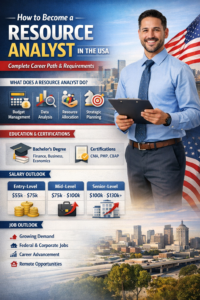
Becoming a Resource Analyst in the USA is an excellent career choice for professionals who enjoy working with data, managing resources, improving efficiency, and supporting strategic decision-making within organizations. Whether in government agencies, private corporations, healthcare systems, IT firms, or consulting companies, Resource Analysts play a crucial role in optimizing financial, human, and operational resources.
This complete EEAT-based (Experience, Expertise, Authoritativeness, Trustworthiness) career guide explains everything you need to know — from education requirements and skills to salary, certifications, job outlook, and how to apply.
What Is a Resource Analyst?
A Resource Analyst is a professional responsible for analyzing and managing an organization’s resources, including:
- Financial resources
- Human resources
- Operational assets
- Technology and infrastructure
- Budget allocations
- Project staffing
They ensure resources are allocated efficiently, budgets are maintained, and performance targets are met.
In government sectors, especially through platforms like USAJOBS, Resource Analysts often work in federal departments such as:
- U.S. Department of Defense
- U.S. Department of Energy
- U.S. Department of Health and Human Services
In the private sector, companies hire Resource Analysts to improve operational efficiency and profitability.
What Does a Resource Analyst Do? (Job Description)
The Resource Analyst job description varies slightly by industry, but core responsibilities include:
1. Budget Planning and Financial Analysis
- Preparing financial reports
- Tracking expenditures
- Forecasting future budget needs
- Monitoring cost efficiency
2. Resource Allocation
- Assigning manpower to projects
- Optimizing material usage
- Reducing resource waste
3. Data Analysis and Reporting
- Analyzing performance metrics
- Creating dashboards and KPIs
- Presenting insights to management
4. Compliance and Policy Monitoring
- Ensuring compliance with internal policies
- Following federal or state financial regulations
5. Strategic Support
- Supporting leadership with planning
- Improving operational processes
Types of Resource Analysts in the USA
You can specialize in different sectors:
- Financial Resource Analyst
- Human Resource Analyst
- IT Resource Analyst
- Project Resource Analyst
- Government Resource Analyst
- Energy Resource Analyst
Each specialization may require slightly different skills or certifications.
Education Requirements to Become a Resource Analyst
Bachelor’s Degree (Minimum Requirement)
Most employers require at least a bachelor’s degree in:
- Finance
- Accounting
- Business Administration
- Economics
- Public Administration
- Data Analytics
Master’s Degree (Optional but Advantageous)
A master’s degree like:
- MBA (Master of Business Administration)
- Master’s in Finance
- Master’s in Public Policy
can significantly increase salary potential and career growth.
Certifications That Boost Your Career
Professional certifications enhance credibility and salary:
- Certified Management Accountant (CMA)
- Project Management Professional (PMP)
- Certified Business Analysis Professional (CBAP)
- Certified Government Financial Manager (CGFM)
For federal jobs, certifications can improve competitiveness on USAJOBS.
Essential Skills Required
Technical Skills
- Advanced Excel
- Financial modeling
- Budget forecasting
- ERP systems
- Data visualization tools (Power BI, Tableau)
Soft Skills
- Analytical thinking
- Communication skills
- Attention to detail
- Strategic planning
- Time management
Step-by-Step: How to Become a Resource Analyst in the USA
Step 1: Earn a Relevant Bachelor’s Degree
Focus on finance, business, or analytics.
Step 2: Gain Entry-Level Experience
Start as:
- Financial Analyst
- Budget Analyst
- Operations Analyst
- Data Analyst
Step 3: Develop Technical Skills
Learn:
- Excel (Advanced)
- SQL
- Financial software
- Budgeting systems
Step 4: Earn Professional Certifications
Certifications improve employability.
Step 5: Apply for Resource Analyst Positions
Use trusted platforms like:
- Indeed
- USAJOBS
Resource Analyst Salary in the USA (2026 Update)
Salary depends on experience, location, and industry.
Entry-Level Resource Analyst
- $55,000 – $75,000 per year
Mid-Level (3–7 Years)
- $75,000 – $100,000 per year
Senior-Level
- $100,000 – $130,000+ per year
Federal government salaries follow the GS Pay Scale, especially within agencies like the U.S. Department of Defense.
State-Wise Salary Overview
Higher salaries are typically found in:
- California
- Texas
- Virginia
- New York
Washington, D.C. offers high pay due to federal agencies.
Job Outlook and Career Growth
The demand for analysts is growing due to:
- Increased data-driven decision-making
- Government budget oversight
- Corporate cost optimization
- Technology-driven resource planning
With experience, you can grow into:
- Senior Resource Analyst
- Finance Manager
- Budget Director
- Operations Manager
- Chief Financial Officer (CFO)
Work Environment
Resource Analysts typically work:
- Full-time (40 hours/week)
- Office-based or hybrid
- Government offices
- Corporate headquarters
- Consulting firms
Remote positions are increasing in 2026.
Federal Government Resource Analyst Career
To work for the federal government:
- Create a profile on USAJOBS
- Prepare a federal-style resume
- Meet GS-grade qualifications
- Pass background checks
Agencies hiring include:
- U.S. Department of Energy
- U.S. Department of Defense
- U.S. Department of Health and Human Services
Resume Tips for Resource Analyst Jobs
Your resume should include:
- Quantifiable achievements
- Budget size managed
- Software proficiency
- Certifications
- Project outcomes
Example:
“Managed $5M annual departmental budget and reduced operational costs by 12%.”
Interview Questions You May Face
- How do you prioritize competing resource demands?
- Explain a time you improved budget efficiency.
- What financial tools do you use?
- How do you forecast long-term resource needs?
Prepare real examples with measurable results.
Advantages of Becoming a Resource Analyst
✔ High salary potential
✔ Strong job stability
✔ Government and private sector options
✔ Career growth opportunities
✔ Data-driven strategic role
Challenges of the Job
✖ High responsibility
✖ Budget pressure
✖ Deadlines
✖ Compliance requirements
Is Resource Analyst a Good Career in 2026?
Yes. Due to:
- Rising data analytics demand
- Increased financial oversight
- Growth in federal budgeting
- Expansion of project-based industries
Resource Analysts are becoming essential in both government and corporate sectors.
Frequently Asked Questions (FAQ)
Q1: What degree is best for a Resource Analyst?
Finance, Business Administration, Economics, or Accounting.
Q2: Is certification mandatory?
No, but it significantly improves career prospects.
Q3: Can I become a Resource Analyst without experience?
Entry-level analyst roles can lead to Resource Analyst positions.
Q4: Do Resource Analysts work remotely?
Many hybrid and remote roles are available in 2026.
Q5: Where can I apply for Resource Analyst jobs?
Through:
- Indeed
- USAJOBS
Final Thoughts
If you are analytical, detail-oriented, and enjoy working with budgets and data, becoming a Resource Analyst in the USA is a rewarding and stable career choice. With the right education, certifications, and experience, you can earn a six-figure salary and work in prestigious federal agencies or top corporations.
How to Become a Resource Analyst in the USA – Complete Career Path & Requirements